 Bioluminescence Tour Holbox
Best Time to Visit Holbox: A Month-by-Month Guide
There is no single best time to visit Holbox, and anyone who tells you otherwise is selling one kind of trip. The island runs a dry season from roughly November to May and a wet season from June to October, and each half of the year trades one thing for another: cooler air and calmer water against higher prices and fuller golf carts, or warmer sea and lower prices against a real chance of a storm on the calendar. This guide breaks the year down by what actually changes on the ground, weather, rain, sargassum, hurricanes, whale sharks and crowd levels, so you can pick dates that match the trip you are actually planning rather than a single month somebody else recommended.
Quick answer
There is no single best time to visit Holbox: the dry season, roughly November to May, gives you calmer water, cooler air and clearer beaches at the cost of higher prices and busier weeks, while the wet season, June to October, is warmer and cheaper but carries the real risk of a named storm, especially August to October. Sargassum is a minor concern here either way, since Holbox faces north away from the drift that hits Cancún and Tulum.
Key takeaways
- Dry season, November to May: calmer water, cooler air, the highest prices and the busiest weeks of the year
- Wet season, June to October: warmer sea, lower prices, short heavy afternoon rain rather than all-day rain, and real hurricane risk from August to October
- Whale shark season runs 15 May to 17 September, which overlaps the warmer months without clashing, since the sharks are a morning trip and the night glow is an evening one
- Sargassum is a low-risk issue on Holbox year-round, cleanest November to April, because the island faces the Gulf of Mexico rather than the open Caribbean
- Cheapest and quietest weeks: September and October, if you accept the storm risk that comes with them
- The month you pick decides your weather and your prices. It does not decide your glow: see how that works separately
What You Came For, and When to Come
If You want dry, calm weather and an easy ferry crossing
Come November to May. Nortes bring wind and chop between roughly November and February, but the crossing and the beaches are at their calmest and cleanest across this window overall.
If You are here for whale sharks
15 May to 17 September, peak sightings reported July and August. Boats leave in the morning, so it does not clash with an evening plan.
If You want the lowest prices on the island
September and October, accepting that this sits inside Atlantic hurricane season, which peaks August to October.
If You want the fewest people on the beach and the shortest lines for a golf cart taxi
The same September to October window carries the thinnest crowds, for the same storm-season trade-off.
If You are building the trip around a night bioluminescence tour
Warm months, May to September, carry the denser reported blooms, but the moon on your specific night decides more than the month does. That part is covered further down this page.
Weather, Rain, Sea and Crowds Through the Year
Regional climate records put daytime highs on Holbox somewhere between about 27°C and 33°C across the whole year, with January the coolest month at a typical mean of about 23.2°C and August the warmest at about 28.3°C. Rainfall follows the same dry-wet split: March is typically the driest month at around 24 mm, and September the wettest at around 115 mm. The table below groups the year into the four windows that actually change your trip, rather than pretending every month is meaningfully different from its neighbor.
| Period | Typical daytime high | Rain | Sea and crowds | What's on |
|---|---|---|---|---|
| November to February | 27–29°C, January coolest (mean ~23.2°C) | Low, but nortes bring wind | Choppier water during nortes; crowds build through the December and February holiday weeks | Dry season begins; glow rated 30–80% (shoulder band) |
| March to May | 29–31°C, warming toward summer | Low, driest month March (~24 mm) | Calmest water of the year; crowds high through Semana Santa (Easter week) | Whale shark season opens 15 May; glow ramping toward the 70–100% summer band |
| June to August | 30–33°C, warmest month August (mean ~28.3°C) | Wet season begins, short heavy afternoon showers rather than all-day rain | Warm sea, densest reported plankton; whale shark peak July and August | Turtle nesting continues; glow rated 70–100% |
| September to November | 27–31°C | Wettest month September (~115 mm); hurricane peak August to October | Lowest crowds and lowest prices of the year; ferry schedules can be disrupted by storms | Whale shark season ends 17 September; turtle nesting winds down through October; glow tapering back toward the shoulder band |
Read it as a trade-off ladder rather than a ranking: the calmest window is also the most expensive and the most crowded, and the cheapest, quietest window is also the one carrying real storm risk. Nothing about that changes based on which month you happen to prefer.
The Dry Season, November to May
This is the version of Holbox in the postcards: cooler air, lower humidity, calmer water and cleaner beaches, running from November through May. It is also the busiest and most expensive stretch of the year, with prices and demand climbing hardest around the December and February holiday weeks and again through Semana Santa in March or April.
The one wrinkle in an otherwise calm season is the nortes, winter cold fronts that roll through roughly between November and February, bringing wind and choppy water for a day or two at a time. Nortes are the main reason a night tour gets cancelled in the winter months, not rain. If you are visiting in this window, keep a flexible day or two in your schedule rather than booking every evening back to back.
- Coolest, driest and calmest stretch of the year overall
- Highest prices and the busiest weeks, especially December, February and Semana Santa
- Nortes (winter wind events) are the real winter cancellation risk, not rain
- Book accommodation and tours well ahead if your dates land in this window
How Much Daylight You Get
The day length swings more than people expect this far south of the tropics' northern edge. Sunset falls between roughly 17:30 in December and 19:30 in June, and Holbox keeps Eastern Standard Time year round because Mexico no longer changes the clocks.
That two-hour spread reshapes an evening. In December the light is gone before dinner, which is generous if you want a dark sky early and awkward if you wanted a swim after a late lunch. In June you can still be on the beach at seven in the evening, but full darkness arrives so late that a night trip on a good lunar date may not leave until well after most people would rather be asleep. Neither is a reason to pick a month. It is a reason to know which one you are getting.
The Wet Season, June to October
June through October runs warmer and wetter, but not in the way "rainy season" usually implies. Rain here tends to arrive as a short, heavy afternoon downpour rather than a grey, all-day soak, and the rest of the day is often clear. September is the wettest month on record at around 115 mm, which is still a modest number set against a genuinely rainy destination elsewhere in the world.
What you get for the trade-off: the warmest sea of the year, the densest reported plankton blooms behind the summer's 70% to 100% glow-intensity band, and noticeably lower prices than the dry season carries. The real cost is plain enough: this window sits inside the Atlantic hurricane season, which runs from 1 June to 30 November.
Hurricane Season, Honestly
Atlantic hurricane season runs 1 June to 30 November, with the peak risk window sitting between roughly August and October. Most days inside that stretch are ordinary Holbox days, sunny with an afternoon shower, and the majority of visitors who travel in these months never see a named storm. The honest caveat is that the risk is real enough to plan around: booking a non-refundable flight, a non-refundable hotel or a single-shot itinerary during peak hurricane months is a genuinely bad idea on a small island reachable only by ferry.
The practical consequence, if a storm does track close, is that the ferry crossing from Chiquilá can be suspended for the roughest days, which is the whole island's supply line as well as its exit. Build a buffer day either side of a booked departure if you are travelling August through October, and keep your accommodation and tour bookings on the more flexible end where you can.
Sargassum, and Why Holbox Mostly Escapes It
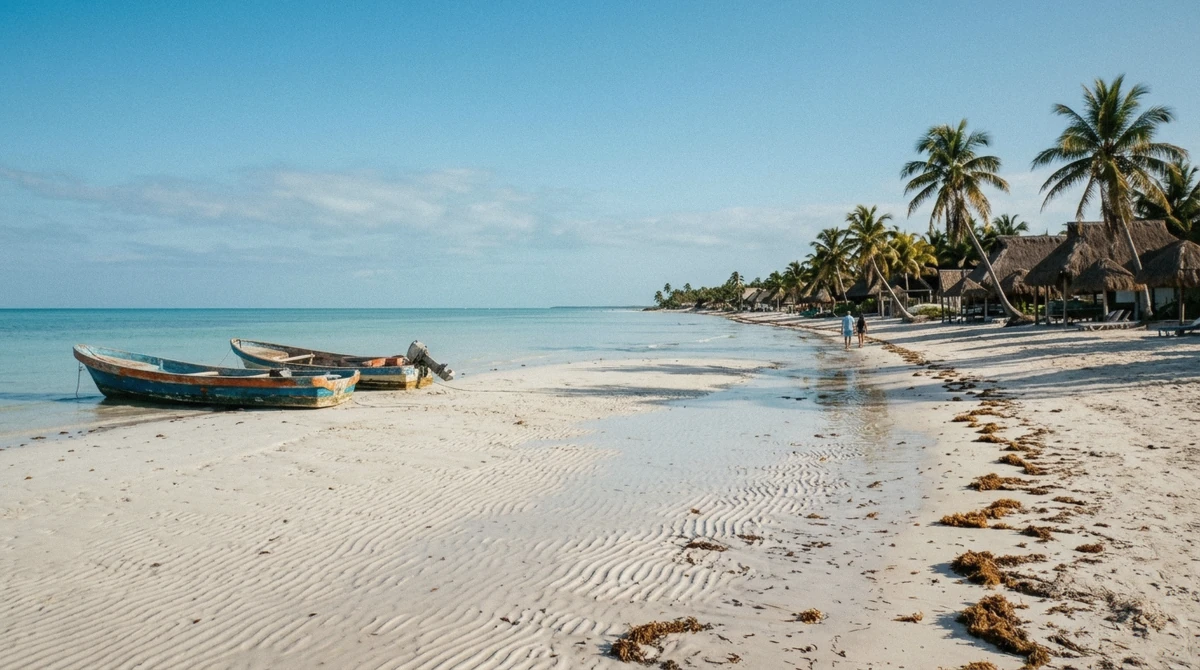
Sargassum, the brown floating seaweed that piles up on Caribbean beaches some years, is a genuine problem on the east-facing coast: Cancún, Playa del Carmen and Tulum all sit exposed to the Atlantic drift that carries it in. Holbox is different by geography rather than luck. The island faces north into the Gulf of Mexico, outside that drift path, which keeps sargassum a low-risk issue here year-round rather than a seasonal certainty.
"Low risk" is not "zero risk," and conditions do vary by year and by week, so this is not a promise for your specific dates. The cleanest stretch reported is November through April, the same window that carries the calmest water generally. If sargassum-free beaches are the deciding factor in your trip, Holbox is a genuinely better bet than the resort towns to its south, and the dry season sharpens that advantage further.

What Is Happening When: Whale Sharks, Turtles, Flamingos and the Glow
Four things move on their own calendars around Holbox, and it helps to see them side by side rather than buried in separate seasons.
| Event | Season | Note |
|---|---|---|
| Whale sharks | 15 May to 17 September, peak July and August | A separate, permitted, morning activity off Holbox; sightings are never guaranteed |
| Sea turtle nesting | Roughly May to October, peak arrivals May to July | Governs a real beach rule: no fires or lamps on the sand during nesting season |
| Flamingos | Reported year-round on the eastern sandbanks | Best viewed from outside the protected boundary at low tide |
| The night glow | No closed season; operators quote it stronger May to September | The moon on your specific night matters more than the month, covered below |
Whale sharks are a genuinely separate booking from anything sold on this site: a protected, permit-capped activity that runs mornings off Holbox during its own season, covered in full here, including the in-water rules and the honest price range. Sea turtles nest on Holbox roughly May through October, and the practical thing to know if you are out after dark during those months is the beach rule that follows from it: no fires and no lamps on the sand during nesting season, a rule we cover on the Punta Mosquito guide along with the low-tide walk out to see the flamingos.
The glow itself gets one honest line here, because this page is about the island, not the bioluminescence season: warm months carry denser reported blooms, but which specific night works is a lunar question, not a monthly one. See which Holbox bioluminescence night to book for the full rule, including why nothing runs on a full moon.
The Bioluminescence Trips, Once Your Dates Are Set
Once you have picked your window for weather, price and crowds, the night itself still comes down to the moon rather than the month. Every listing here cancels free up to 24 hours out, which is worth using if your dates fall inside hurricane season.
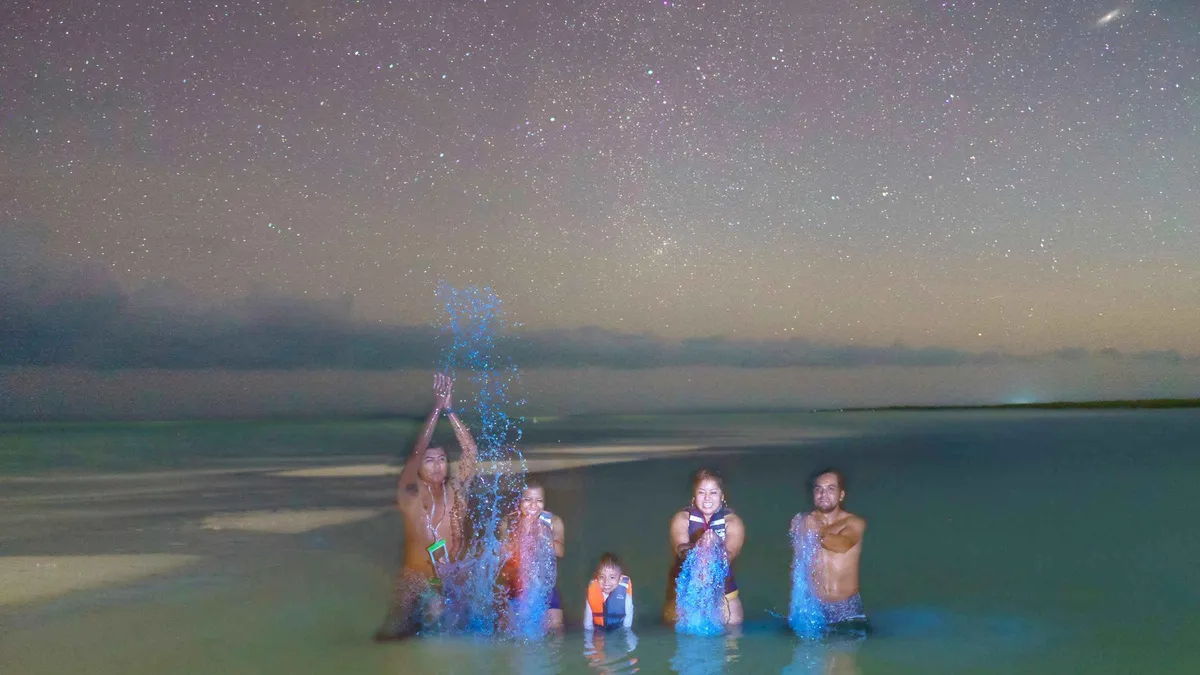 from $51.93Most Booked — 4.6★, 300 Reviews
 Bioluminescence Kayak & Stargazing to the Punta Mosquito Sandbars
Two hours by kayak out to the Punta Mosquito sandbars, the darkest water within reach of town, with stargazing time away from Holbox's lights.
Check Availability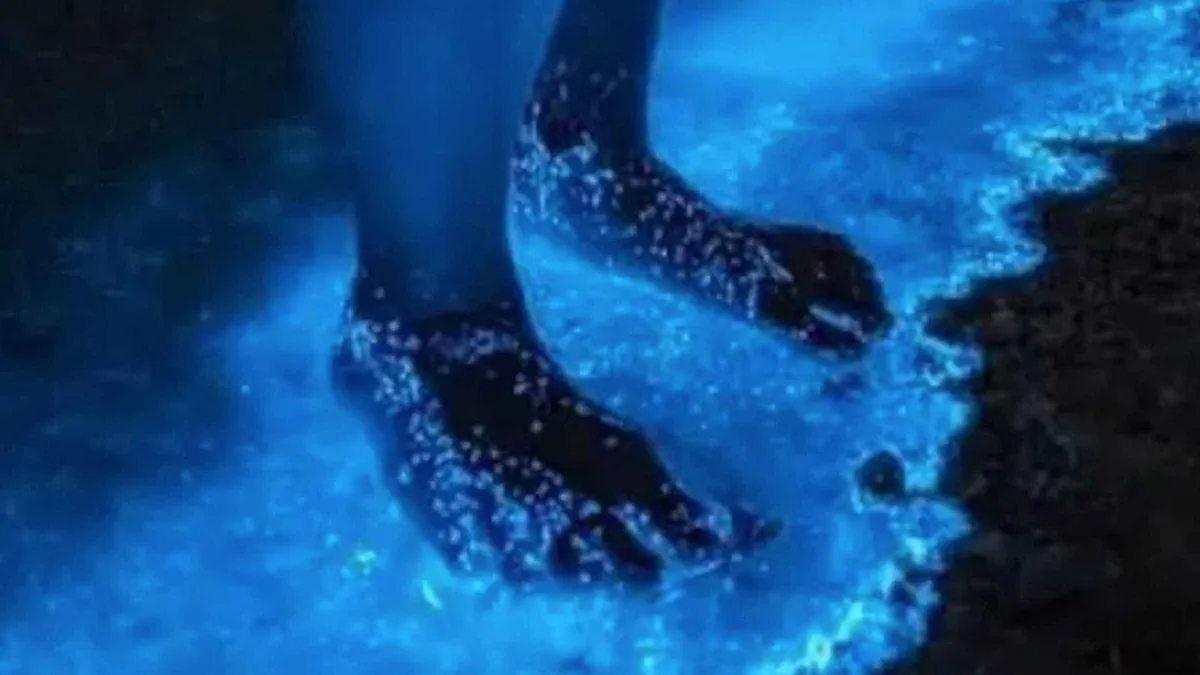 from $51.93Shortest — 90 Minutes
 Guided Night Kayak to the Glowing Sandbank
The compact version: an hour and a half of guided paddling to the glowing sandbank and back, at the same price as the longer sandbar trip.
Check Availability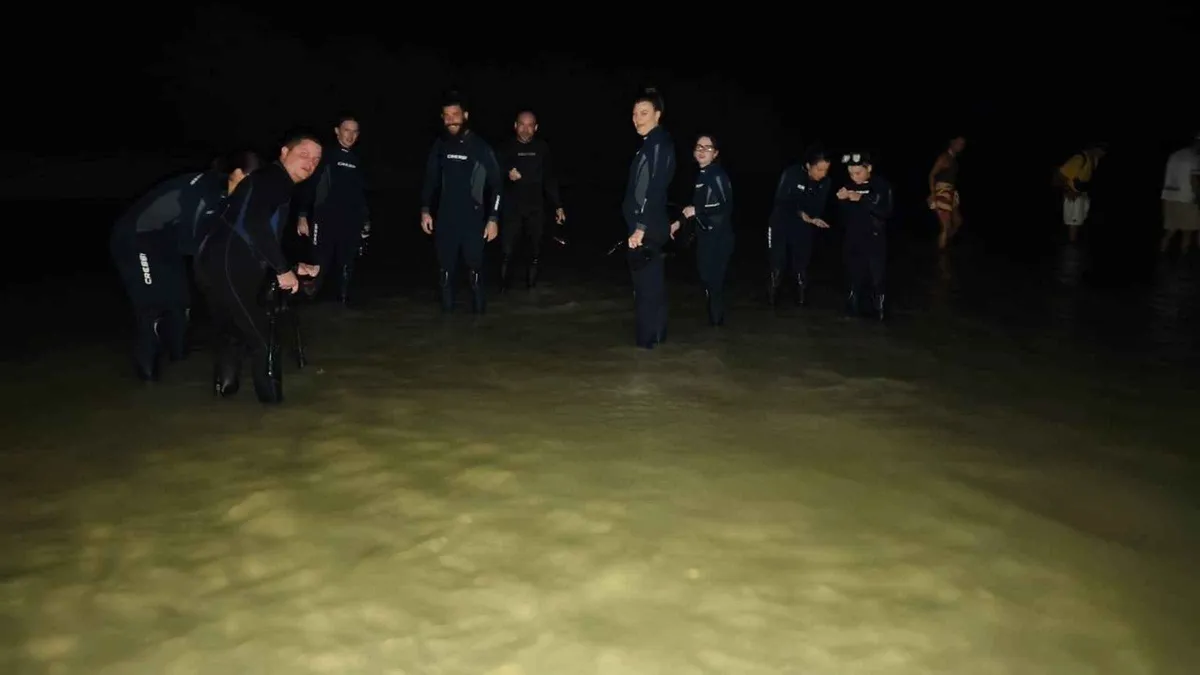 from $53.66In the Water — Wetsuit Swim
 Wetsuit Bioluminescence Swim with a SECTUR Guide
The only listing here that puts you in the water rather than on it. Wetsuit and mask, a SECTUR-certified guide, and a briefing on what makes the plankton…
Check AvailabilityThe Month Is Not the Decision. The Moon Is.
Everything above, dry versus wet, cheap versus busy, storm risk versus calm water, is a genuine monthly trade-off. The night glow does not work that way. Start times move between roughly 20:00 and 04:00 depending on when the sky actually goes dark, nothing runs on a full moon regardless of the month printed on the calendar, and guides confirm the exact hour the evening before rather than at booking.
Pick your travel window for the weather and the price first, then check the lunar calendar for your actual dates before locking in the kayak trip to the sandbars.
How Long to Stay, and When to Book
Holbox does not work as a same-day trip if the night glow is any part of the reason you are coming. The last boat off the island leaves around 20:00 to 20:30, well before the night tours even start, so at least one overnight on the island is not optional if you want a real shot at seeing it. Two nights gives you a second dark evening in case wind or a thin bloom costs you the first.
Book accommodation and tours well ahead for December through April, the dry season's busiest run, and again for the mid-May to mid-September whale shark window, when rooms near town fill fast. September and October carry the loosest availability and the lowest prices, for the storm-season trade-off already covered above.
- Check the lunar calendar for your travel dates, not just the season, before booking a night tour
- Book two nights minimum if the glow is part of the plan, as a buffer against wind or a thin bloom
- Book rooms and tours early for December to April and for the mid-May to mid-September whale shark window
- Keep a flexible day in your itinerary during hurricane season, roughly August to October
- Confirm your hotel is within easy reach of your tour's pickup point, covered on our where-to-stay guide
None of this adds up to a single best month, because the honest answer depends on what you actually came for. Someone chasing calm water and clean beaches should aim for the dry season and accept the higher prices that come with it. Someone chasing whale sharks has a fixed window regardless of anything else on this page.
Someone chasing the lowest prices and the emptiest beaches should look at September and October and go in with eyes open about hurricane season. Whichever window you pick, the glow itself still runs on the moon, not the month, so check that separately once your travel dates are set.
Questions About the Best Time to Visit Holbox
What is the best month to visit Holbox overall?
There is no single best month; it depends on the trip. November to May is calmer, cooler and cleaner but pricier and busier. June to October is warmer and cheaper but carries hurricane risk, peaking August to October. Whale shark season, 15 May to 17 September, is its own fixed window regardless of the rest.
Does Holbox get sargassum, and when is it worst?
Rarely, and it is a low-risk issue year-round. Holbox faces north into the Gulf of Mexico, outside the Atlantic drift that hits the east-facing beaches at Cancún, Playa del Carmen and Tulum. The cleanest reported stretch runs November to April, but conditions do vary by week.
When is hurricane season on Holbox, and how risky is it really?
Atlantic hurricane season runs 1 June to 30 November, with the peak risk window roughly August to October. Most days in that stretch are ordinary sunny days with an afternoon shower. The real risk is booking non-refundable plans during the peak months; the ferry can be suspended if a storm tracks close.
When is the cheapest time to visit Holbox?
September and October, the low point for both prices and crowds, in exchange for sitting inside the peak of hurricane season. If you want lower prices without the storm risk, late October into November is a reasonable middle ground as the season winds down.
How many days do you need on Holbox?
Two nights is a reasonable minimum if a night bioluminescence tour is part of the plan, since the last ferry off the island leaves well before the tours start, and a second night gives you a backup dark evening if the first gets cancelled for wind. Three or four days lets you add a whale shark morning or a slower pace without rushing.
When are the whale sharks near Holbox?
15 May to 17 September, with peak sightings reported in July and August. It is a permitted, morning-only activity, entirely separate from the evening bioluminescence trips, so the two do not clash on the same day. Full detail, including the in-water rules, is on our whale shark guide.
When is Holbox most crowded?
The December and February holiday weeks and Semana Santa (Easter week) in March or April are the busiest stretches, layered on top of the generally fuller dry season. The whale shark months, mid-May to mid-September, also fill rooms near town. September and October are the quietest weeks of the year.