 Bioluminescence Tour Holbox
Whale Shark Tours from Holbox: What the Season Actually Involves
A whale shark tour holbox season runs mid-May to mid-September, and it is not something this site sells. What follows is the version other operator pages tend to skip: how the permit system actually works, what the in-water rules require, what a morning on the water costs, and why the same months also happen to be the best stretch for the after-dark bioluminescence trips this site does book.
Quick answer
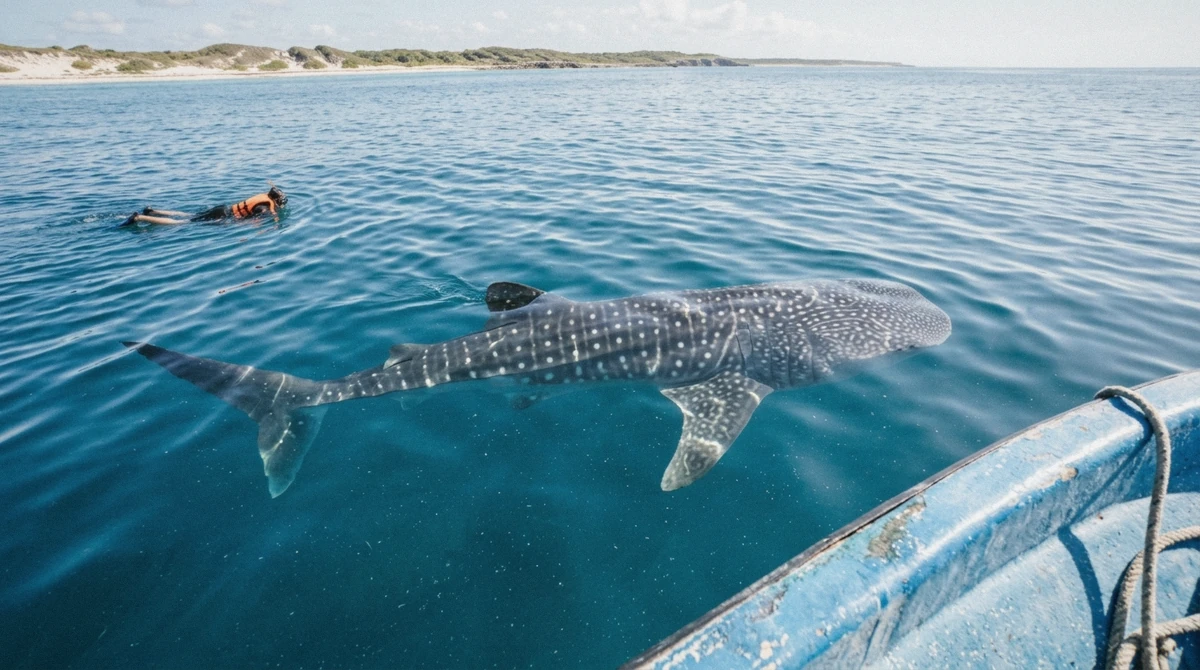
Whale shark season off Holbox runs from 15 May to 17 September, with peak sightings in July and August, and a shared boat trip typically costs somewhere between about $120 and $250 per person depending on the operator. Access is controlled by a capped, counted permit system, sightings are never guaranteed, and when five or fewer sharks are detected in the area everyone stays on the boat and watches rather than getting in the water.
Key takeaways
- Official season: 15 May to 17 September, peak July and August, set by Mexican federal environmental authorities, not by any tour operator
- Shared trips run roughly $120 to $250 per person; a commonly quoted 2026 price from Holbox was around MXN 3,150, about $185
- Maximum two swimmers plus one guide in the water with a shark at a time, life jacket or wetsuit mandatory, no touching, no riding
- The season overlaps the operators' 70% to 100% window for the after-dark plankton trips on Holbox, so one trip on the island covers both
- It's a morning activity, 4 to 7 hours door to door; for the full month-by-month picture see when to visit Holbox
- This site doesn't sell the shark trip; the kayak and swim listings are what we actually book
The Season, and Who Sets It
Whale shark season off Holbox is not a tourism-board suggestion, it is a fixed federal window: 15 May to 17 September, with peak concentrations reported in July and August, when plankton blooms draw the animals to feed off the northern Yucatán coast.
The water involved is the Reserva de la Biosfera Tiburón Ballena, a marine reserve of roughly 145,000 to 146,000 hectares running from Isla Contoy down to Bahía de la Ascensión, adjoining the Yum Balam reserve that covers Holbox itself. Rhincodon typus, the whale shark, is listed under NOM-059-SEMARNAT-2010, Mexico's official list of species at environmental risk, which is the legal basis for the whole permit system described below. For the rest of the year on the island, see when to visit Holbox month by month.
What the Permit Rules Actually Say
The rules that actually govern a whale shark tour are not marketing copy, they are permit conditions. The table below is what they say.
| Rule | In practice |
|---|---|
| Maximum two swimmers plus one guide in the water at a time | Everyone else waits their turn on the boat |
| Life jacket or wetsuit mandatory | No exceptions for confident swimmers |
| No touching, no riding | A guide who allows either is breaking the permit condition, not bending a guideline |
| Maximum 30 minutes of interaction with the same animal or group | The clock resets when the boat moves to a different shark |
| Five or fewer sharks detected in the area: observation from the boat only | Some days nobody gets in the water at all |
| Biodegradable sunscreen only | Ordinary sunscreen is not permitted in the reserve |
Permits Are Capped and Counted
Boats do not simply show up. For the season ending mid-September 2026, CONANP authorised 146 permits across the whole whale shark zone: 92 at Isla Mujeres, 48 at Holbox, 6 at Chiquilá, distributed across 14 tourism cooperatives. A boat without one of those permits is operating illegally, whatever its website says.
There is no public app that lets a visitor look up a permit number before booking, so the practical check is simpler: ask which cooperative the boat operates under, and be wary of a price that sits well below the range in the cost table further down. A permit costs the operator money and caps how many trips a cooperative can run in a season, and an unusually cheap trip is one place that cost sometimes gets cut.
What a Morning on the Water Actually Looks Like
Boats leave Holbox roughly between 06:30 and 09:00, and the crossing to the feeding grounds runs 60 to 75 minutes each way in calm conditions, so the whole outing, door to door, takes 4 to 7 hours. Boats are typically capped around 8 to 10 passengers, with snorkel gear and life jackets provided.
That schedule is also why the morning trip and the night bioluminescence trip do not clash: the shark boat is back at the dock well before the plankton tours even confirm a start time, which can land anywhere from 20:00 to 04:00 depending on the moon. If you're staying somewhere without an easy walk to the dock at that hour, our guide to where to stay on Holbox covers areas by how early you actually need to leave.
The Morning, Hour by Hour
A typical shape for the trip, built from the departure and crossing times operators quote. Treat the clock times as approximate.
-
06:00
Meet at the dock
Gear check, life jackets fitted, safety briefing
-
06:30 to 09:00
Departure window
Boats leave within this range depending on the operator and the day's conditions
-
+60 to 75 min
Crossing to the feeding grounds
Calm-water estimate; longer if the sea is rough
-
On site
In-water time, two swimmers plus a guide at a time
Up to 30 minutes per animal or group; boat-only if five or fewer sharks are detected
-
Return leg
Crossing back to Holbox
Same 60 to 75 minutes, plus any stop the operator adds
-
Early-to-mid afternoon
Back at the dock
4 to 7 hours door to door, well clear of the night tours' start times
What a Trip Costs
Shared trips from Holbox were commonly quoted around MXN 3,150 including taxes per person aged 10 and over in the 2026 season, about $185 at 17.0 pesos to the dollar, checked August 2026. Across operators the range runs roughly $120 to $250 per person, and some quote a separate reserve wristband of about MXN 100, roughly $6, on top. Last verified: August 2026.
| Price point | What it typically means |
|---|---|
| Around $120 | Lower end of the shared-boat range, fewer inclusions |
| Around $185 (MXN 3,150) | Commonly quoted 2026 shared-trip price from Holbox, taxes included |
| Around $250 | Upper end of the shared-boat range |
| +MXN 100 (about $6) | Reserve wristband some operators charge separately |
Sightings Are Not Guaranteed, and What Happens When There Are None
No operator can promise a shark, whatever the brochure photo shows. The five-or-fewer rule alone means some mornings nobody gets in the water at all, because the count that day falls at or under the threshold and the permit conditions keep everyone on the boat. Sea state cancels trips outright on other days, wind and swell making the crossing or the in-water time unsafe.
That is the honest baseline for a wild-animal encounter in open water: real, regulated, and never certain. A tour page that promises a guaranteed sighting is promising something the permit system itself does not allow it to guarantee.

Holbox or Isla Mujeres
The permit split tells you most of what matters: 92 permits at Isla Mujeres against 48 at Holbox for the season ending mid-September 2026. Isla Mujeres runs more boats and sits closer to Cancún, which usually means an earlier, shorter transfer if you are staying in the hotel zone there. Holbox runs fewer boats and a longer trip out from the island itself, in exchange for a quieter departure and a base that already suits the after-dark plankton trips.
Neither departure point is reported as reliably better for sightings; the animals move with the plankton bloom, not with which dock a boat left from. The practical choice is usually about where you are already staying and what else you are doing with the trip, not a documented difference in shark encounters between the two.
The Two Things Happen on the Same Days
Mid-May to mid-September is also the window the bioluminescence operators quote their strongest numbers for: 70% to 100% intensity, against 30% to 80% the rest of the year. A visitor booked for whale sharks is already on the island in the right months for the night trip too, and the two do not compete for the same hours. The shark boat runs in the morning and is back at the dock hours before the night trip even confirms its start time, which the guide sends the evening before once the moon and sky are worked out.
The plan that makes sense of both: book the shark morning first, since its departure window is fixed within a few hours, then hold the night trip loose and let the operator confirm your start time the evening before, same as the night trips here always work. The two-hour kayak trip and the wetsuit swim are among the listings this site actually books; neither one runs on a full moon, whale shark season or not.
The Night Trips That Run in the Same Months
Not the whale shark boat: the after-dark trips that share its season.
 from $51.93Most Booked — 4.6★, 300 Reviews
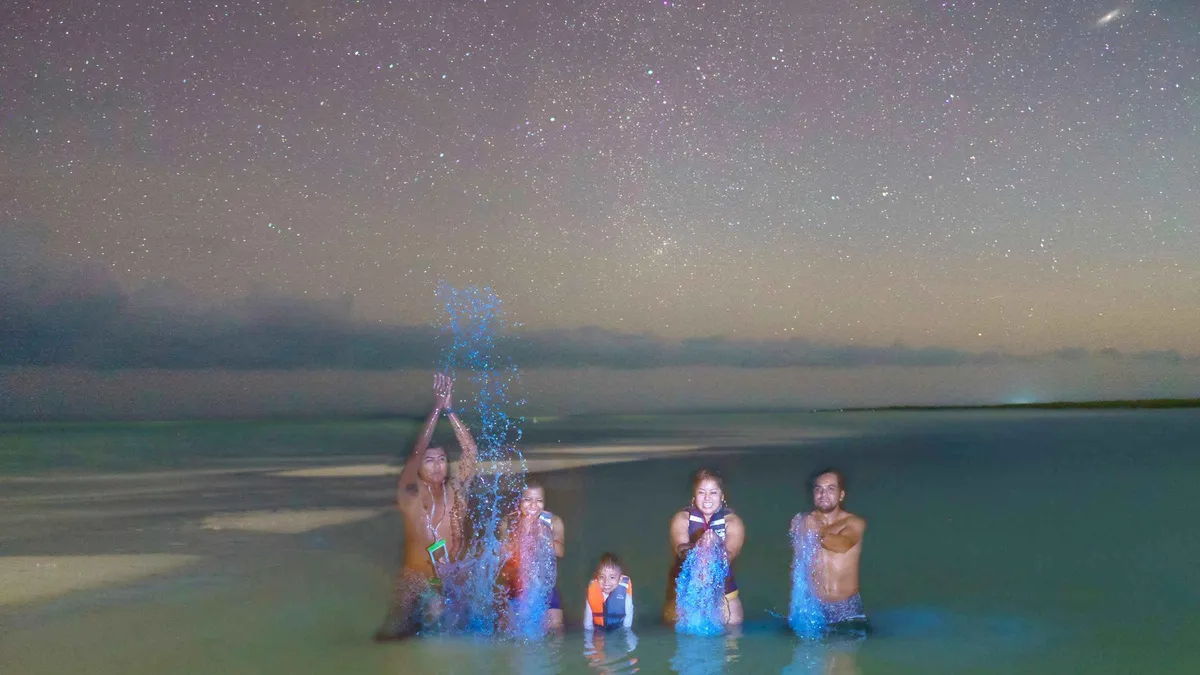
 Bioluminescence Kayak & Stargazing to the Punta Mosquito Sandbars
Two hours by kayak out to the Punta Mosquito sandbars, the darkest water within reach of town, with stargazing time away from Holbox's lights.
Check Availability from $51.93Shortest — 90 Minutes
 Guided Night Kayak to the Glowing Sandbank
The compact version: an hour and a half of guided paddling to the glowing sandbank and back, at the same price as the longer sandbar trip.
Check Availability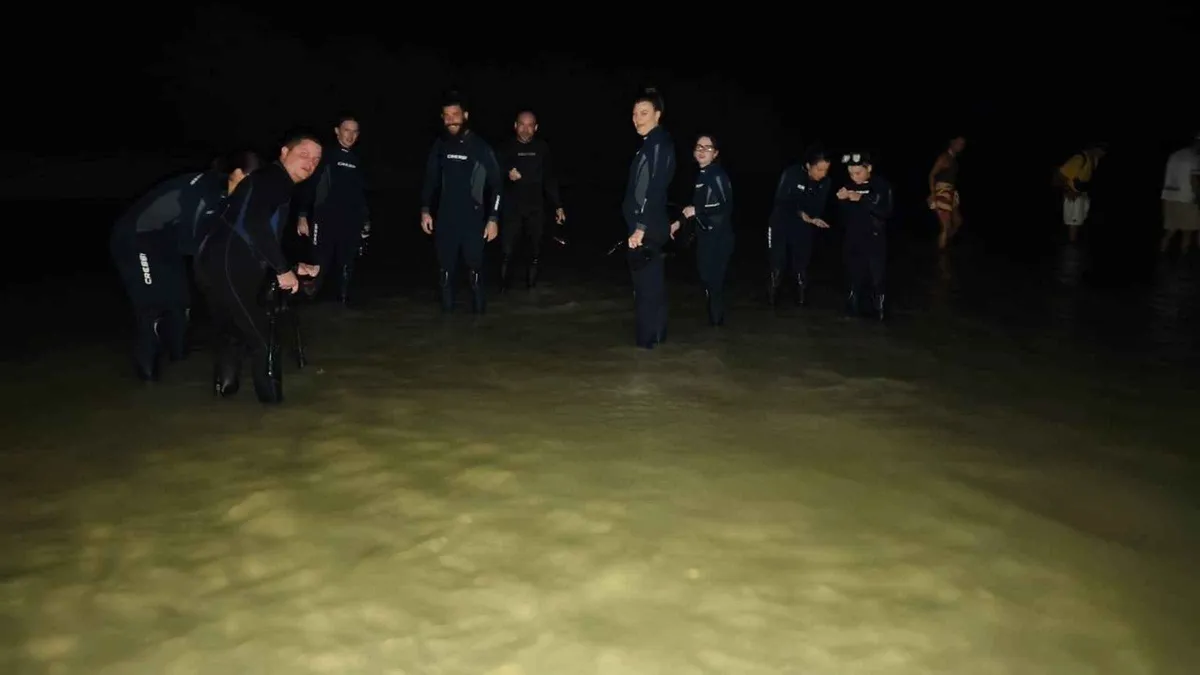 from $53.66In the Water — Wetsuit Swim
 Wetsuit Bioluminescence Swim with a SECTUR Guide
The only listing here that puts you in the water rather than on it. Wetsuit and mask, a SECTUR-certified guide, and a briefing on what makes the plankton…
Check AvailabilityRules for the Swimmer, and Who Should Think Twice
No touching, no riding, no chasing: those three cover most of what the permit conditions require of a swimmer, alongside staying behind the guide rather than swimming ahead to get closer. Biodegradable sunscreen only, since ordinary sunscreen is not permitted in the reserve.
A few groups should think twice before booking. The crossing runs 60 to 75 minutes each way and can be rough, which makes motion sickness a real consideration on a long open-water trip. Pregnancy and back or heart conditions are worth discussing with a doctor before a long boat ride and open-water swimming, and weak swimmers should know the life jacket is mandatory but the water is open ocean, not a sheltered lagoon, so real comfort in open water matters more here than on the shallow sandbar trips this site sells.
- Biodegradable, reef-safe sunscreen only
- A rash guard or light wetsuit if you chill quickly
- Motion-sickness tablets taken before boarding, not after
- Cash for tips and the reserve wristband if the operator charges one separately
If the whale shark morning is already on your calendar, the honest advice is to treat the sighting itself as a possibility rather than a promise, and to plan the trip around the permit rules rather than around a brochure photo. The same months that bring the sharks bring the strongest bioluminescence numbers too, so the island rewards a longer stay from May through September more than it rewards trying to squeeze both into one trip.
The season dates, permit counts and price range here were checked against CONANP's published figures and operator quotes in August 2026.
Questions About Whale Sharks on Holbox
When is whale shark season in Holbox?
From 15 May to 17 September, with peak sightings in July and August. The dates are set by Mexican federal environmental authorities, not by any individual tour operator.
How much does a whale shark tour from Holbox cost?
Shared trips run roughly $120 to $250 per person; a commonly quoted 2026 price was around MXN 3,150, about $185, for age 10 and over. Some operators add a separate reserve wristband of about MXN 100. Last verified: August 2026.
Are whale shark sightings guaranteed on a Holbox tour?
No. Sea state cancels trips, and when five or fewer sharks are detected in the area, everyone stays on the boat and observes rather than getting in the water. No operator can promise an animal.
Is it safe to swim with whale sharks, and can non-swimmers do it?
Whale sharks are filter feeders with no interest in people, and the permit rules keep interactions short and supervised. A life jacket is mandatory, which helps non-swimmers, but the crossing and the swim happen in open ocean, not a sheltered lagoon, so real comfort in open water matters.
Is Holbox or Isla Mujeres better for whale sharks?
Neither is documented as reliably better for sightings; the animals follow the plankton bloom, not the departure point. Isla Mujeres runs more permits, 92 against Holbox's 48, and usually a shorter transfer from Cancún; Holbox offers a quieter departure and a base that suits the after-dark plankton trips.
Can you do whale sharks and the bioluminescence trip on the same visit to Holbox?
Yes. The whale shark boat runs in the morning and is back at the dock hours before the night listings even confirm a start time, and the two seasons overlap from mid-May to mid-September.
How long is the whale shark trip from Holbox, start to finish?
Roughly 4 to 7 hours door to door: a 60 to 75 minute crossing each way, plus in-water time capped at 30 minutes per animal or group under the permit rules.
What else is worth doing on the island in the same week?
The low-tide walk east to the sandbank at the island's far end, which is a bird morning rather than a beach morning and comes with real protected-area rules attached; we wrote it up in our guide to Punta Mosquito. The western point is the sunset side and the place to see the glow for free, covered in our guide to Punta Cocos. Both are half-days, and neither clashes with a morning on the water or with a night trip such as the two-hour kayak paddle.